Firewise landscaping is the strategic design and maintenance of your property to reduce wildfire risk by removing flammable vegetation, breaking up fuel sources, and using fire-resistant hardscaping. For homes located in the wildland-urban interface (WUI), this approach creates a critical buffer that slows fire spread and blocks flying embers from igniting your home.
If you are planning a backyard and landscaping upgrade, factor fire protection into your initial design. The right layout, building materials, and plant choices provide significant protection when wildfires approach.
- What Is Defensible Space and How Do You Create It?
- How to Choose Fire-Resistant Plants and Stop Ladder Fuels
- How to Harden Your Property Against Ember Attacks
- Can Property Hardening Lower Your Home Insurance?
- Secure Your Home Exterior Today
- Frequently Asked Questions
- Is firewise landscaping legally required in high-risk zones?
- What plants work best for fire safety?
- How do exterior upgrades affect insurance costs?
- What is the Ember-Resistant Zone (Zone 0)?
- Can I still have trees in my yard?
What Is Defensible Space and How Do You Create It?
Defensible space creates a physical boundary between your home and surrounding vegetation. It starves an advancing fire of fuel and gives firefighters a safe staging area to defend your property.
Cal Fire guidelines recommend dividing your yard into specific, highly managed zones to maximize protection:
| Safety Zone | Distance | Primary Action |
| Zone 0 (Ember-Resistant) | 0 to 5 feet | Eliminate all combustible materials; use bare soil, gravel, or concrete. |
| Zone 1 (Lean, Clean, and Green) | 5 to 30 feet | Remove dead plants; space out vegetation to prevent fire transfer. |
| Zone 2 (Reduced Fuel) | 30 to 100 feet | Mow grass to a maximum of 4 inches; space trees to create horizontal fuel breaks. |
Structuring your yard according to these zones drastically lowers your vulnerability to fast-moving flames and intense heat.
How to Choose Fire-Resistant Plants and Stop Ladder Fuels
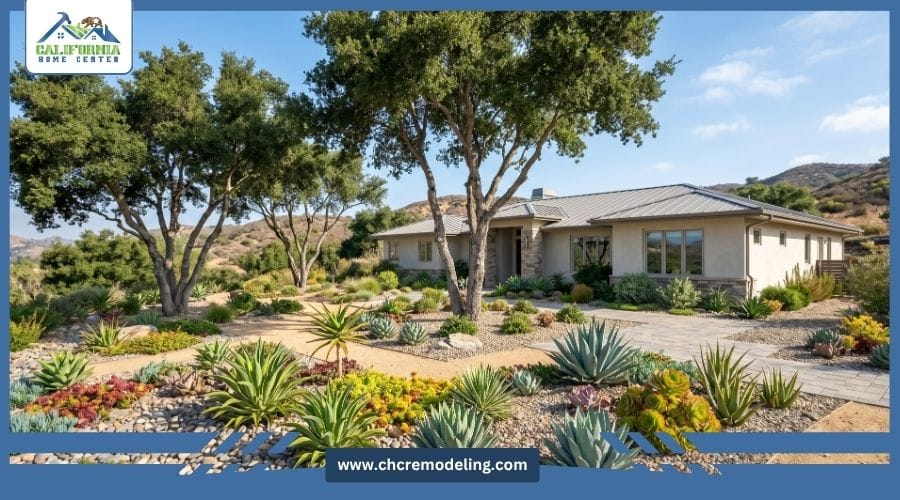
Plant selection directly dictates your fire risk. While no vegetation is completely fireproof, some species are much harder to ignite.
Select high-moisture, low-resin plants. Native broadleaf evergreens and succulents are highly preferable to oil-rich trees like eucalyptus or pine.
Spacing is just as critical as plant selection. You must eliminate "ladder fuels" vegetation that allows fire to climb from the ground up into the tree canopy. Maintain clear vertical clearance by trimming tree branches at least 6 feet from the ground and keeping lower shrubs spaced far away from tree trunks.
How to Harden Your Property Against Ember Attacks
Wind-blown embers cause the majority of home ignitions during a wildfire. They travel miles ahead of the main fire front and land on exterior vulnerabilities.
Harden your property by eliminating these common ignition points:
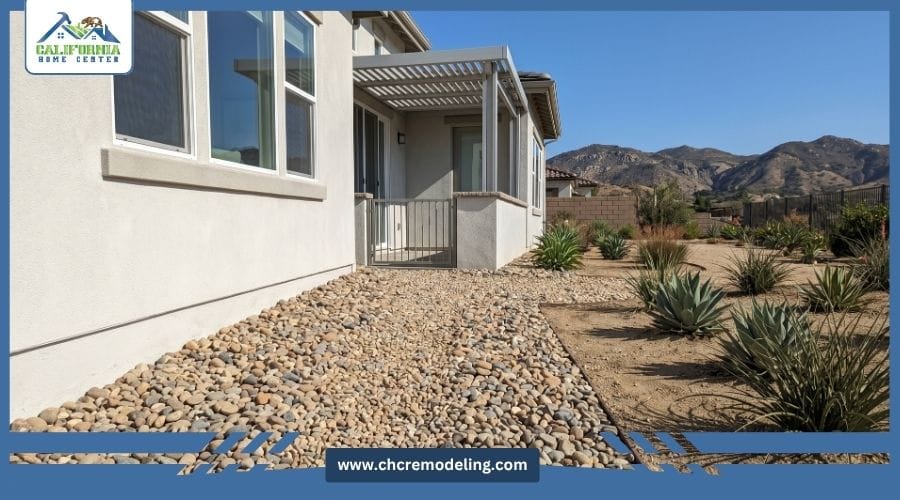
- Replace organic mulch: Wood bark and pine needles ignite instantly. Use noncombustible materials like gravel, river rock, or hardscaping (such as pavers or concrete) inside Zone 0.
- Upgrade attached fencing and structures: A wooden fence connected directly to your house acts as a fuse. Install a noncombustible metal or masonry gate for the five feet closest to your home. Similarly, if you are adding shade structures near the house, opt for ignition-resistant materials like an aluminum pergola rather than wood.
- Clear debris systematically: Embers land and smolder in dry leaves accumulating on roofs, decks, and gutters. Clean these areas routinely.
Combining ignition-resistant materials with rigorous maintenance, along with upgrading vulnerable openings to ember-resistant windows and doors, prevents embers from finding fuel near your foundation.
Can Property Hardening Lower Your Home Insurance?
Hardening your home's exterior often results in lower insurance premiums. California insurance providers increasingly reward property owners who document measurable steps to mitigate wildfire risk.
Adhering to defensible space standards outlined by the National Fire Protection Association (NFPA) strengthens your property's safety rating. Upgrading to Class A fire-rated materials, such as evaluating asphalt shingles vs. a metal roof and maintaining Zone 0 clearances, proves your home is an active defense rather than a liability.
Additionally, state programs like the California Department of Insurance's "Safer from Wildfires" framework provide specific upgrade pathways that legally qualify homeowners for insurance discounts.
Secure Your Home Exterior Today
Delaying wildfire preparation is a risk you cannot afford in Southern California. Proactive property hardening protects your structure, your safety, and your financial investment.
If you are planning a landscaping project, prioritize a layout that integrates defensible space without sacrificing aesthetic appeal. A clinically planned exterior mitigates fire risks while ensuring your yard remains highly functional.
California Home Center is a full-service general contractor in Temecula CA, specializing in custom homes, ADUs, exterior remodeling, and comprehensive home remodeling for residential property owners.
Frequently Asked Questions
Is firewise landscaping legally required in high-risk zones?
Yes. California law dictates strict defensible space requirements for properties located in designated State Responsibility Areas (SRAs) and high fire hazard zones. Non-compliance results in citations and fines.
What plants work best for fire safety?
Prioritize plants with high water content and low sap or resin. Succulents, native ice plants, and high-moisture broadleaf shrubs resist ignition far better than dry grasses or conifers.
How do exterior upgrades affect insurance costs?
Carriers frequently apply discounts for documented property hardening. This includes establishing an ember-resistant zone, installing fire-rated vents, and using noncombustible decking materials.
What is the Ember-Resistant Zone (Zone 0)?
Zone 0 covers the immediate 5-foot perimeter around your home. It must remain completely free of flammable materials, including wood mulch, plants, and stored firewood, to prevent embers from igniting the structure.
Can I still have trees in my yard?
Yes. However, you must space the canopies at least 10 feet apart and prune lower branches to remove ladder fuels. Never allow tree branches to overhang your roof or touch your chimney.

41593 Winchester Rd Suite 200, Temecula, CA 92590
(951) 889-7577
https://chcremodeling.com
contact@chcremodeling.com
Recent Posts

ADU Requirements Every Homeowner Should Know
Jun 30, 2026