
Learning how to get insurance to pay for roof replacement is the difference between a massive out-of-pocket expense and a fully funded home restoration. Most homeowners fail to get approval because they lack the specific technical evidence or policy knowledge required to prove a valid loss to their carrier.
You must move past the idea of "claiming a roof" and start documenting a "sudden and accidental peril" supported by local building codes and forensic proof. In this guide, you will learn the exact steps to identify covered damage, align your policy type with your claim, and manage the adjuster meeting to ensure a successful outcome.
- Roof Replacement Insurance Payouts: RCV vs ACV
- How Local Building Codes Affect Roof Replacement Insurance Claims
- Evidence Required for a Roof Replacement Claim
- Roof Replacement Insurance Claim Steps
- 1. Professional Condition Assessment
- 2. File the Claim With a Date of Loss
- 3. Joint Inspection With the Adjuster
- 4. Review the Estimate Carefully
- 5. Supplement if Necessary
- Common Reasons Roof Claims Are Denied
- When to Hire a Roofing Professional for an Insurance Claim
- Secure Your Insurance for Full Roof Replacement
- Frequently Asked Questions
- What kind of roof damage is covered by homeowners' insurance?
- How do I prove my roof has hail damage?
- Should I call my insurance or a roofer first?
- What do I do if the insurance adjuster denies my claim?
- Do I need a professional inspection before filing a claim?
Roof Replacement Insurance Payouts: RCV vs ACV
Your policy type determines exactly how much money the insurance company will send you for the project. Review your declarations page to identify which valuation structure applies to your home:
- Replacement Cost Value (RCV): The insurer pays the total cost to replace the roof with materials of like kind and quality at current market rates.
- Actual Cash Value (ACV): The insurer pays the fair market value, which subtracts depreciation (decreased value due to age and wear) from the replacement cost.
- Recoverable Depreciation: The financial gap between ACV and RCV is held by the insurer until you provide a final invoice proving the work is complete.
- Scheduled Roof Payment Endorsement: Some policies calculate payout based on roof age using a percentage schedule. This can significantly reduce reimbursement.
| Valuation Type | Payout Calculation | Homeowner Out-of-Pocket |
| RCV | Today's Roof Material and Labor Cost | Deductible Only |
| ACV | Today's Cost minus Age and Wear | Deductible + All Depreciation |
| Scheduled Roof Payment Endorsement | Fixed % based on Roof Age | Varies (often high) |
How Local Building Codes Affect Roof Replacement Insurance Claims
Building codes can influence the total cost of replacement. If your policy includes ordinance or law coverage, required code upgrades may be eligible for reimbursement. Common code-related triggers include:
- The Matching Doctrine: Some states have matching laws that may require broader replacement if materials cannot be reasonably matched.
- Drip Edge Requirements: Modern building codes require this metal flashing at the eaves, even if your original roof did not have it installed.
- Ice and Water Shield: In colder climate zones, building codes often require this waterproof membrane at the eaves to help prevent ice dam damage.
- Decking Integrity: If your roof uses spaced sheathing, codes often require a solid plywood deck before a new roof can be installed.

Evidence Required for a Roof Replacement Claim
Documentation is the only way to turn an "old roof" into a valid insurance claim. Use these technical indicators to prove to the insurance company that a storm event actually occurred:
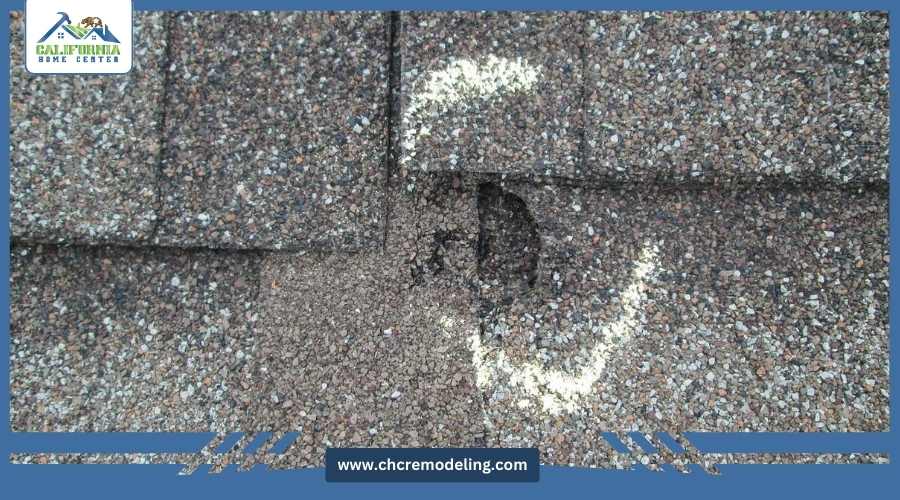
- Wind Damage: This is identified by lifted, creased, or missing shingles that have lost their adhesive seal during a high-wind event.
- Hail Impact: This involves the fracturing of the fiberglass matting underneath the granules, which can lead to leaks over time.
- Collateral Damage: Dents on gutters, soft metal vents, or window screens prove the storm had the kinetic energy required to damage the shingles.
- The Brittleness Test: This test may demonstrate that an older shingle cannot be lifted for repair without cracking, which can support the case for full replacement.
Roof Replacement Insurance Claim Steps
Following the correct order improves claim accuracy and reduces delays.
1. Professional Condition Assessment
Schedule a licensed roofing inspection before contacting your insurer. This helps determine whether damage meets claim thresholds.
2. File the Claim With a Date of Loss
Provide a specific storm date if possible. Weather data and contractor documentation can support this.
3. Joint Inspection With the Adjuster
Having your contractor present allows both parties to review damage together and clarify technical findings.
4. Review the Estimate Carefully
Compare the adjuster’s scope of work with your contractor’s estimate to ensure all necessary components are included.
5. Supplement if Necessary
If required items such as permit fees, code upgrades, or disposal costs were omitted, your contractor can submit documentation for review.
Common Reasons Roof Claims Are Denied
Even when damage exists, claims are often denied due to documentation or classification issues. Understanding these triggers helps prevent avoidable setbacks.
- No Verifiable Storm Date: Insurers require a specific date tied to a documented weather event. Without this, the damage may be classified as gradual deterioration.
- Damage Attributed to Aging: Granule loss, surface cracking, and material fatigue are generally considered maintenance issues rather than sudden damage.
- Prior Unrepaired Damage: If earlier storm damage was never repaired, new claims may be denied due to pre-existing conditions.
- Filing Outside the Policy Deadline: Most policies impose strict reporting windows for storm-related damage. Missing this deadline can void otherwise valid claims.
When to Hire a Roofing Professional for an Insurance Claim
Some aspects of a roof claim can be handled independently, while others benefit from professional guidance.
You Can Handle:
- Reviewing your declarations page
- Confirming your deductible amount
- Contacting your insurance agent for clarification
Professional Assistance Is Recommended For:
- Technical inspections
- Adjuster meetings
- Code compliance documentation
- Scope review and supplementation
Accurate documentation reduces misunderstandings and improves claim efficiency.
Secure Your Insurance for Full Roof Replacement
Successfully getting an insurance company to pay for your roof depends entirely on your ability to present facts over opinions. By identifying the correct policy type, documenting the specific storm damage, and leveraging local building codes, you move the conversation from a request to a requirement.
Do not wait until a leak appears to start this process, as many policies include time limits for storm-related claims. Review your policy to confirm your specific deadline. Here at California Home Center, we specialize in helping homeowners with roofing services and navigating these complex requirements to ensure every technical detail is documented correctly.
Frequently Asked Questions
What kind of roof damage is covered by homeowners' insurance?
Homeowners' insurance typically covers damage caused by sudden and accidental events such as hail, high winds, fire, and falling objects like tree limbs. It does not cover damage resulting from age, lack of maintenance, or general wear and tear.
How do I prove my roof has hail damage?
Proving hail damage requires documenting physical impacts like bruised shingles, circular cracks in the asphalt matting, or significant granule loss. You should also document collateral damage to soft metals like gutters and vents to support the claim.
Should I call my insurance or a roofer first?
You should always call a roofer first to perform a professional inspection. A roofer can confirm if there is enough damage to warrant a claim, helping you avoid a “zero-pay” claim on your insurance record, which may affect future underwriting decisions.
What do I do if the insurance adjuster denies my claim?
If your claim is denied, you can request a re-inspection with a different adjuster or a supervisor. You may also provide additional evidence, such as an engineer's report or a brittleness test, to dispute the initial findings.
Do I need a professional inspection before filing a claim?
Yes, a professional inspection is critical to ensure you have a specific date of loss and documented proof of damage. Without this preparation, you risk an immediate denial if the adjuster does not find obvious evidence during their brief visit.

41593 Winchester Rd Suite 200, Temecula, CA 92590
(951) 889-7577
https://chcremodeling.com
contact@chcremodeling.com