The best roofing materials for your home depend on local energy rules, fire safety requirements, and the weight your home's structure can support. Choosing the right material helps protect your home while shaping its exterior style and long-term performance.
Your roof serves as your home's main defense against heat, weather, and fire risk. This guide explains your options so you can make a confident, informed decision for your new roof upgrade.
- The Three Critical Buying Factors
- Title 24 Energy Compliance
- Fire Safety Ratings
- Structural Weight Capacity
- Roof Material Comparison Table
- The Different Types of Roof Materials for Your Home
- Asphalt Shingles
- Stone Coated Steel
- Concrete Tiles
- Clay Tiles
- Standing Seam Metal
- Synthetic Shingles
- Slate Roofing
- Wood Shakes
- Built-Up Roofing
- TPO and PVC Membranes
- Solar Shingles
- Roof Shapes and Material Compatibility
- How to Choose the Best Type of Roof for Your Home
- Frequently Asked Questions
- What is the most energy-efficient roof for hot climates?
- Can I install a tile roof on an existing home?
- Why are wood shake roofs difficult to insure?
- What is a cool roof rating?
- How long does a metal roof last compared to asphalt?
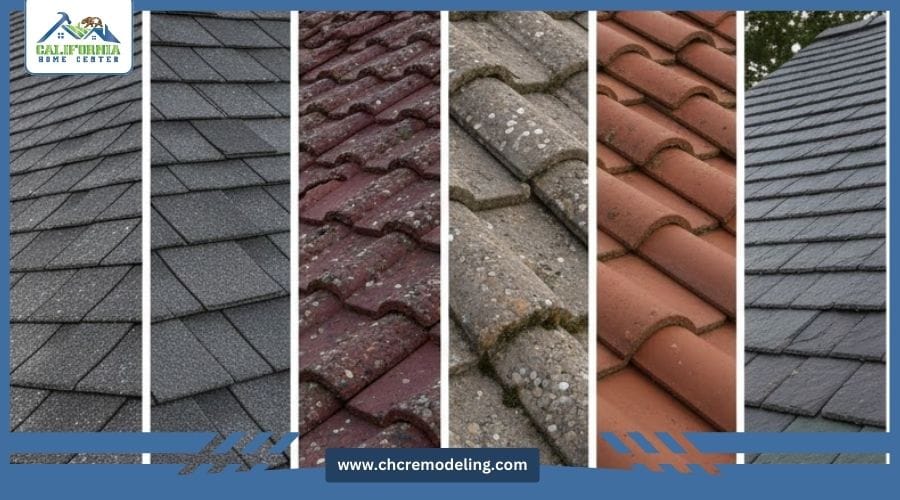
The Three Critical Buying Factors
Before selecting a roofing material, you need to understand the regulations that govern what is safe, legal, and insurable in your area.
Title 24 Energy Compliance
State energy standards require certain roofing products to reduce heat absorption. These rules help lower cooling costs during hot summer months and are known as Title 24.
Many homes need to use cool roof materials that reflect sunlight instead of absorbing it. You should verify that your chosen product meets reflectance standards through the official Cool Roof Rating Council.
Fire Safety Ratings
Fire resistance is essential for protecting homes from wildfires and wind-blown embers. Roofing materials receive Class A, B, or C ratings based on fire performance. Class A offers the highest protection and is required in many fire-prone zones.
Insurance providers often demand this rating. Guidance on protecting your home from wildfires is available from CAL FIRE Home Hardening.
The video below explains how fire-resistant roofing materials help protect homes in wildfire-prone areas and meet Class A fire safety standards.
Fire-Resistant Roofing | Protect Your Home with Spengler Industries
Structural Weight Capacity
Roofing materials vary widely in weight. Clay, concrete, and slate are far heavier than asphalt shingles. You cannot replace a lightweight roof with a heavy one without a structural review. In many cases, an engineer must approve the structural weight capacity. FEMA outlines roof load safety in this roof system fact sheet.
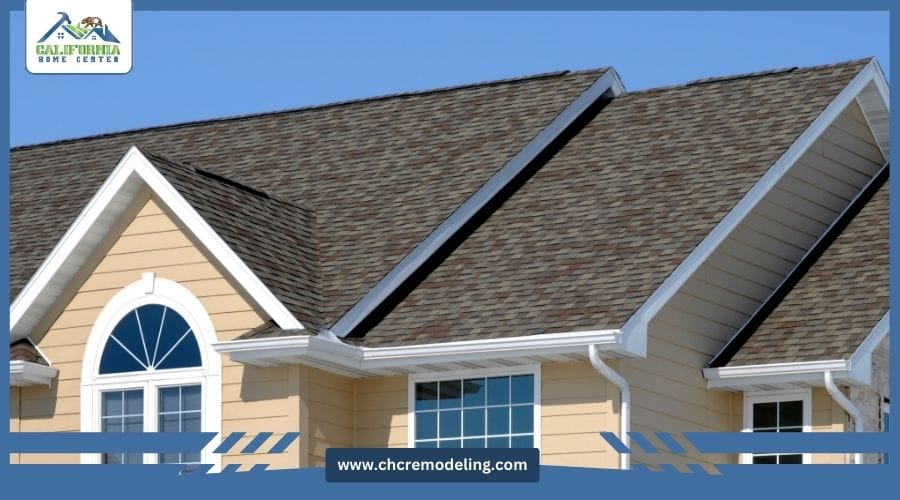
Roof Material Comparison Table
This table works best here because it lets you quickly compare performance, weight, and use cases before diving into details.
| Material | Fire Rating | Weight | Best Use |
| Asphalt Shingles | Class A (cool-rated) | Light | Budget-friendly homes |
| Stone Coated Steel | Class A | Very light | Asphalt-to-metal upgrades |
| Concrete Tile | Class A | Heavy | Tile-style architecture |
| Clay Tile | Class A | Very heavy | Mediterranean designs |
| Standing Seam Metal | Class A | Light | Modern and solar-ready homes |
| Synthetic Shingles | Class A | Light | Slate or wood appearance |
| Slate | Class A | Extremely heavy | Luxury custom homes |
| Wood Shakes | Low | Medium | Rare due to fire risk |
| Built-Up Roofing | Class A | Heavy | Flat roof sections |
| TPO / PVC Membranes | Class A | Light | Flat roofs and patios |
| Solar Shingles | Class A | Medium | Integrated energy systems |
The Different Types of Roof Materials for Your Home
We reviewed eleven roofing options to help homeowners compare durability, safety, and style before upgrading.
Asphalt Shingles
Asphalt shingles remain popular because they balance cost and ease of installation. They fit most roof shapes and come in many colors. Architectural shingles add depth through layered design. In warmer zones, cool-rated granules are required to meet energy codes.
Stone Coated Steel
Stone-coated steel delivers the look of tile or wood with far less weight. Interlocking panels resist wind and carry a Class A fire rating. Most homes do not require structural upgrades for installation.
Concrete Tiles
Concrete tiles offer durability and the look of slate or wood at a lower cost. They are heavy and require strong framing. Proper sealing matters, as moisture absorption can lead to damage over time.
Clay Tiles
Clay tiles define Spanish and Mediterranean styles. Their natural color never fades, and their mass slows heat transfer. They are brittle and very heavy, making expert installation essential.
Standing Seam Metal
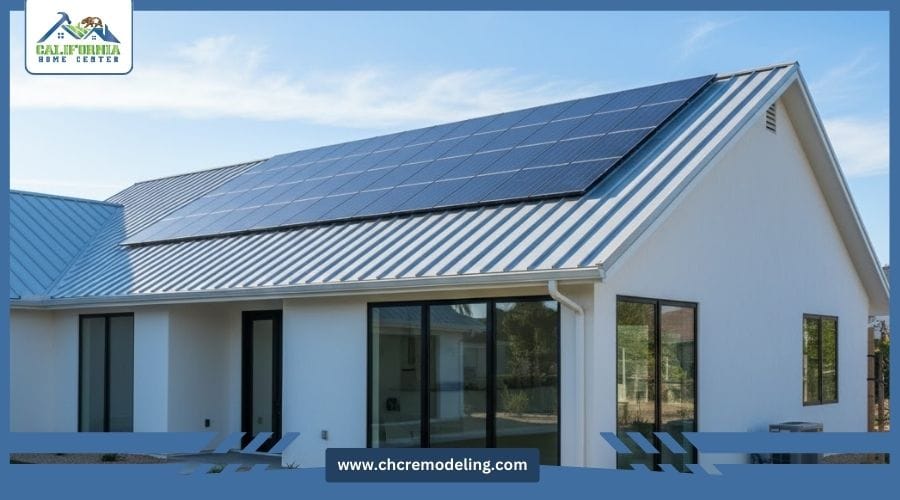
Standing seam metal roofs use concealed fasteners that reduce leaks and corrosion. They offer excellent fire resistance and work well with solar systems that clamp to seams without drilling. For details, see our compare asphalt and metal directly guide.
Synthetic Shingles
Synthetic shingles replicate slate or wood without the weight or fire risk. They resist impact damage and usually carry Class A ratings, making them a smart alternative for high-end designs.
Slate Roofing
Slate is a premium roofing material that can last over a century. It adds strong resale value but requires major structural support and specialized installers. This option suits luxury homes with flexible budgets.
Wood Shakes
Wood shakes provide a natural, rustic look but face strict fire regulations. Many insurers refuse coverage due to ignition risk. Synthetic look-alikes offer a safer solution.
Built-Up Roofing
Built-Up Roofing uses layered asphalt and fabric with gravel or cap sheets. It suits flat sections but is heavy and difficult to repair. Reflective coatings are often needed to meet energy codes.
TPO and PVC Membranes
TPO and PVC membranes are now the standard for flat residential roofs. These white sheets reflect heat, resist pooling water, and meet strict efficiency standards. They are ideal for patios and modern additions.
Solar Shingles
Solar shingles combine roofing and energy production in one system. They provide a low-profile appearance and work best when paired with battery storage. If planning a full upgrade, visit our roof replacement services page.
Roof Shapes and Material Compatibility
The shape of your different-pitched roof often determines which materials perform best. Knowing these styles helps you plan and communicate clearly with contractors.
- Gable: Two sloping sides meeting at a ridge; works with most materials
- Hip: Four sloped sides; offers better wind resistance
- Flat: Slight pitch; requires membranes like TPO or PVC
- Shed: Single slope; ideal for metal roofing and solar panels
- Mansard: Four sides with steep lower slopes and dormer windows
How to Choose the Best Type of Roof for Your Home
Choose a roofing material that aligns with your fire zone requirements and your home's structural limits. Balancing safety, efficiency, and appearance leads to fewer issues and better long-term performance. Not sure which option fits your roof structure? Contact California Home Center for expert roofing services in Temecula and a free inspection.
Frequently Asked Questions
What is the most energy-efficient roof for hot climates?
TPO membranes and metal roofs with cool pigments reflect the most sunlight. Clay tiles also perform well due to their heat-delaying mass.
Can I install a tile roof on an existing home?
Often no. Tile weighs much more than shingles, and structural reinforcement may be required after an engineer's review.
Why are wood shake roofs difficult to insure?
They are combustible and easily ignite from embers during wildfires, making them high risk for insurers.
What is a cool roof rating?
It measures how well a roof reflects solar energy and releases heat. Many building codes require minimum ratings.
How long does a metal roof last compared to asphalt?
Metal roofs typically last 40 to 70 years, while asphalt shingles average 20 to 30 years.

41593 Winchester Rd Suite 200, Temecula, CA 92590
(951) 889-7577
https://chcremodeling.com
contact@chcremodeling.com
Recent Posts

What Is the Best Material for a Pergola
Mar 26, 2026