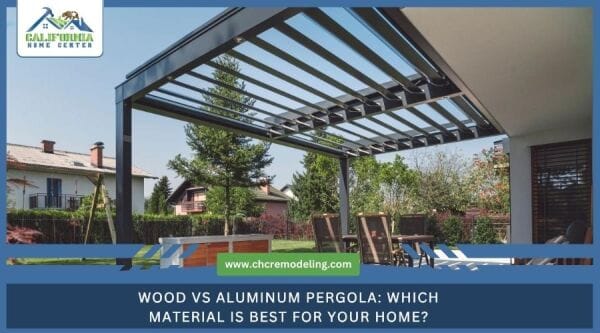
When choosing between a wood vs aluminum pergola, you must balance the initial purchase price against long-term durability and upkeep. Both materials offer unique benefits in terms of aesthetics, maintenance requirements, and overall cost. In this guide, we examine the trade-offs between traditional timber and modern metal to help you select the best outdoor structure for your home.
- Quick Comparison: Wood vs. Aluminum
- Comparing the Three Pillars of Pergola Design
- Aesthetics: Tradition vs. Modernity
- Maintenance and Longevity
- Initial Investment and Long-Term ROI
- Choosing the Best Pergola for Your Backyard
- Frequently Asked Questions
- Is an aluminum pergola better than wood?
- Does a wood pergola require more maintenance than aluminum?
- Which is more expensive: a wood or aluminum pergola?
- Does an aluminum pergola look as good as wood?
- How long does a wood pergola last compared to aluminum?
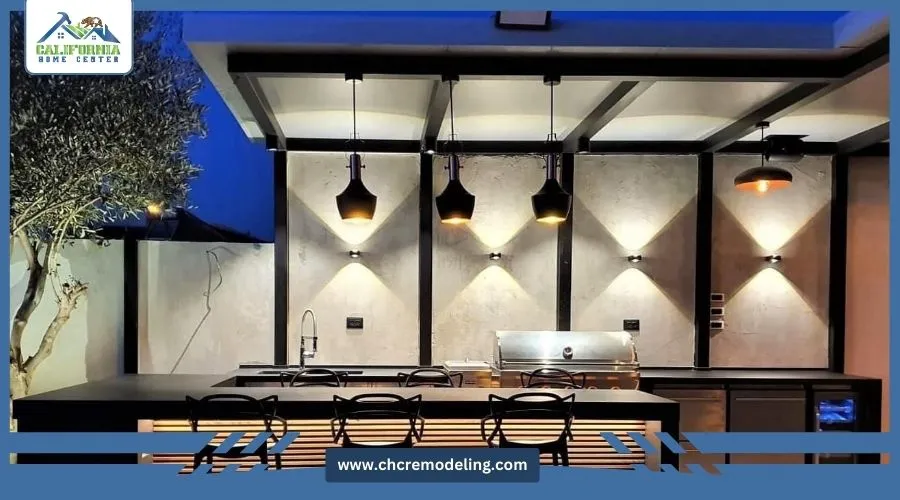
Quick Comparison: Wood vs. Aluminum
The following guide provides a side-by-side look at the most common building materials available today. Use this data to quickly see which option fits your specific backyard needs and budget.
| Feature | Wood (Cedar/Redwood) | Aluminum |
| Maintenance | High (Stain/Seal every 2 years) | Low (occasional wash; powder-coated) |
| Lifespan | Often 10–20 years (depends on upkeep & climate) | Often 20+ years (depends on coating & environment) |
| Resistance | Vulnerable to rot & termites | Won't rust; highly corrosion-resistant; rot- & pest-resistant |
| Initial Cost | Lower | Higher |
| Tech Options | Manual additions only | Integrated options may be available (varies by system) |
Comparing the Three Pillars of Pergola Design
When looking at a pergola material comparison, you should focus on how the structure looks, how much work it takes to keep it nice, and what it costs over time.
Aesthetics: Tradition vs. Modernity
Your choice between a cedar vs aluminum pergola often depends on whether you prefer natural textures or clean lines. Modern manufacturing allows you to customize your look with the following options:
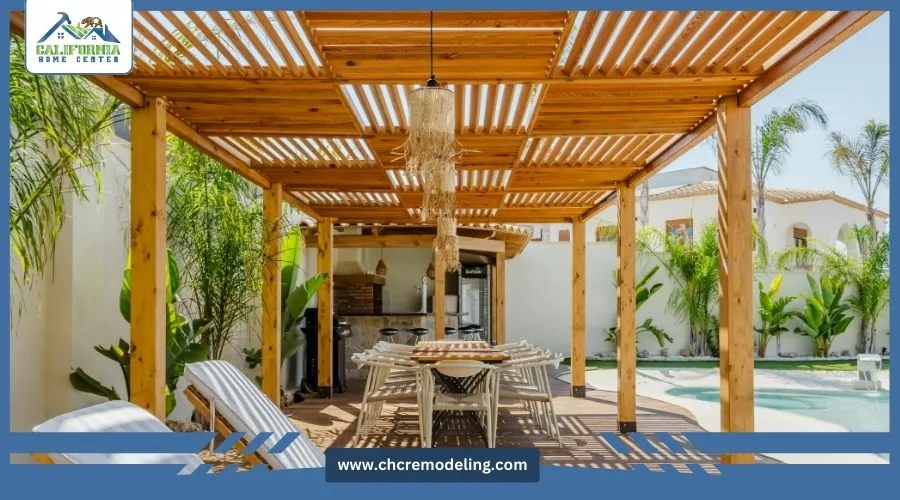
- Natural Wood: Real Cedar provides an organic texture and a unique silvering patina process that offers a warm, rustic feel for classic gardens.
- Modern Aluminum: These structures use rafters made of extruded aluminum to create a sleek, minimalist style with factory colors like Black, White, or Bronze.
- Wood-Grain Aluminum: This innovation uses specialized powder coating to mimic real timber texture, providing the look of wood without the risk of rot.
Maintenance and Longevity
The longevity of your structure is determined by how well the material handles moisture and pests. Review these factors to see how much work you are willing to do each year:
- Wood Requirements: Real timber requires labor-intensive sanding, staining, and sealing to protect it from termites and structural decay.
- Aluminum Durability: Because it is rust-resistant, extruded aluminum does not require painting and holds up well in heavy rain when properly installed and cared for.
- Environmental Performance: Aluminum often performs better than wood in high-humidity or coastal environments, especially with a quality finish.
Initial Investment and Long-Term ROI
Understanding the aluminum pergola vs wood cost involves looking at both the sticker price and the future upkeep. Consider these financial points before making a final purchase:
- Upfront Costs: Buying a metal vs wood pergola usually reveals that wood is the entry-level price point for initial installation.
- Total Cost of Ownership: Over time, recurring expenses for wood staining and repairs can exceed the one-time investment required for an aluminum structure.
Choosing the Best Pergola for Your Backyard
The right choice depends on your lifestyle and how much time you want to spend on home chores. If you are a "Naturalist" who prefers the look of real timber and does not mind seasonal work, Cedar is an excellent choice. However, if you are a "Tech-Forward" owner who wants a structure that stays looking great for years with minimal upkeep, aluminum is the better investment.
California Home Center can help you evaluate your space to ensure you pick a material that handles the local climate. Call us today for expert pergola installation.
Frequently Asked Questions
Is an aluminum pergola better than wood?
For most homeowners, aluminum is the better choice because it offers superior durability and does not require constant care. It resists common wood issues like warping, termites, and decay, and it can keep your backyard looking great for many years with minimal upkeep.
Does a wood pergola require more maintenance than aluminum?
Yes, wood requires significantly more maintenance because it is a natural material that reacts to the sun and rain. Most wood pergolas need cleaning and resealing or restaining about every 2–3 years (sometimes sooner in harsh sun), and sanding depends on the condition of the finish. Aluminum is virtually maintenance-free and only needs an occasional wash to stay clean.
Which is more expensive: a wood or aluminum pergola?
Wood has a lower initial price for materials and installation, but it becomes more expensive over time due to high maintenance costs. Aluminum has a higher upfront cost but can save money over time because you usually avoid staining and chemical treatments and may reduce long-term repair needs.
Does an aluminum pergola look as good as wood?
Modern technology has closed the aesthetics gap between these two materials. While some prefer the authentic feel of real timber, wood-grain aluminum provides a similar look with a high-quality finish. It offers a beautiful, natural appearance without the peeling paint or weathered cracks that eventually affect real wood structures.
How long does a wood pergola last compared to aluminum?
A wood pergola often lasts around 10–20 years, depending on the wood type, climate, and how well it's maintained. An aluminum pergola is a durable investment, often lasting twenty years or more because the metal won't rust, resists corrosion, and doesn't rot.

41593 Winchester Rd Suite 200, Temecula, CA 92590
(951) 889-7577
https://chcremodeling.com
contact@chcremodeling.com
Recent Posts

What Is the Best Material for a Pergola
Mar 26, 2026