
A kitchen remodeling project touches plumbing, electrical, and often the structure of the room itself, which is exactly why two projects that look similar on paper can land at very different price points and finish dates. Homeowners usually come to us with a rough budget and a move-in date in mind, then find the gap between "rough estimate" and "actual invoice" comes down to a handful of specific decisions.
In this guide, we walk through what really moves the cost, how a typical project unfolds phase by phase, and the things that most often push a Temecula kitchen job past its original schedule.
- The Decisions That Change Your Kitchen Remodel Price
- The Kitchen Remodel Timeline, Phase by Phase
- Design and Material Selection
- Permits and Plan Check
- Demolition and Rough-In
- Cabinets, Countertops, and Finish Work
- Final Inspection and Walkthrough
- The Real Reasons Temecula Kitchen Timelines Slip
- Get a Clear Cost and Timeline Picture for Your Kitchen
- Frequently Asked Questions
- Do I need a permit to remodel my kitchen in Temecula?
- What makes one kitchen remodel cost more than another?
- Should I choose stock, semi-custom, or custom cabinets?
- Can I stay in my home during a kitchen remodel?
- What should I do to prepare before the crew arrives on day one?
The Decisions That Change Your Kitchen Remodel Price
A kitchen remodel quote isn't one number so much as several decisions stacked together, and two kitchens the same size can land far apart in price once you look at what's actually changing underneath the counters. Here are the factors that move a quote the most:
- Cabinet Construction Type: Stock cabinets ship fastest and cost the least, semi-custom gives you more size and finish options at a moderate premium, and fully custom cabinetry costs the most and takes the longest to build. This single choice affects both your budget and your schedule more than almost anything else on the list.
- Layout Changes: Keeping your sink, stove, and refrigerator in the same footprint is far cheaper than relocating plumbing or gas lines, or removing a wall between the kitchen and another room. Moving those systems adds labor, materials, and often an engineer's sign-off.
- Appliance Package: Builder-grade appliances and a professional-grade range, refrigerator, and hood system sit at opposite ends of a wide price spectrum, and this line item alone can shift a budget significantly.
- Countertop and Surface Material: Laminate, quartz, and natural stone all perform differently and price differently, and some natural stone selections carry longer fabrication times on top of the material cost.
- Permit and Plan Check Fees: Any scope that touches electrical, plumbing, mechanical systems, or wall framing requires a permit in Temecula, and the City charges plan check and permit fees on top of the construction cost itself.
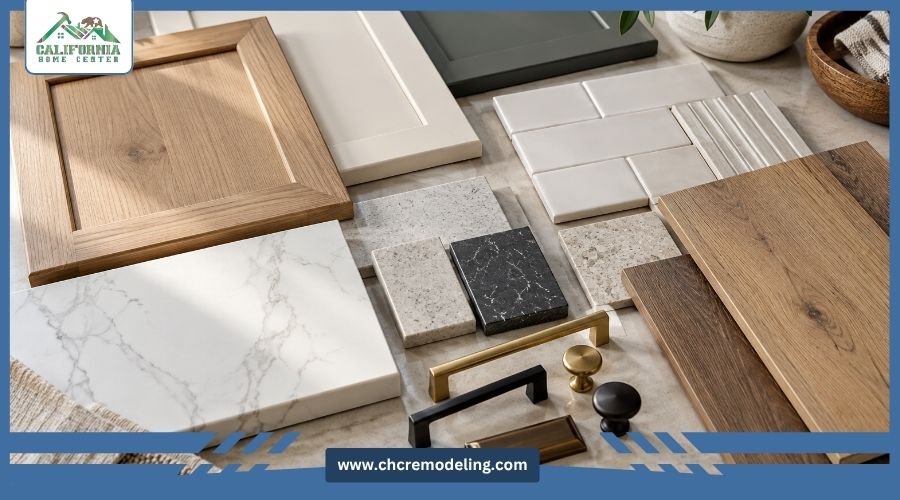
These decisions all happen in sequence, and the earlier you settle on cabinet type and layout, the more accurate your final number gets. Homeowners working with a tighter footprint often ask about this first, and we've put together a few smart small-kitchen layout ideas that come up again and again on jobs where square footage is the real constraint, not the budget.
The Kitchen Remodel Timeline, Phase by Phase
A kitchen remodel moves through the same general sequence almost every time, even though the length of each phase depends on the choices above. Here's how the work actually unfolds from the first walkthrough to the final inspection.
Design and Material Selection
This is where the scope gets locked in, and it's the phase most worth slowing down for. Here's what typically happens during this stage:
- Walk through the space and confirm what's changing, including layout, appliances, cabinets, and finishes.
- Finalize cabinet style and construction type, since this decision drives the order timeline for everything that follows.
- Select countertops, flooring, backsplash, and lighting so pricing reflects the real scope, not a placeholder.
- Place cabinet and major appliance orders as early as possible once selections are locked.
Permits and Plan Check
If the scope includes electrical, plumbing, mechanical, or framing changes, which most kitchen remodels do, Temecula requires a building permit before work starts. Permits are submitted through the City's own online Permit Center, and the City doesn't publish a set turnaround window for plan check, which is exactly why it's worth submitting as early in the process as possible rather than treating it as a quick formality.
Whoever ends up doing the work should also be properly licensed and bonded, and the state's contractor license lookup tool makes that a two-minute check before you sign anything.
Demolition and Rough-In
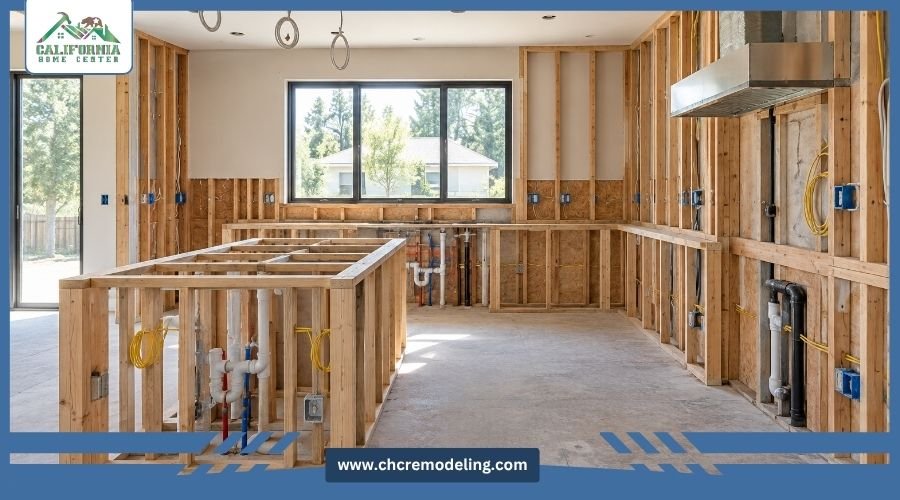
Old cabinets, countertops, and fixtures come out first, followed by rough plumbing, electrical, and mechanical work behind the walls. Here's the order this phase usually follows:
- Remove existing cabinets, countertops, flooring, and fixtures.
- Rough in any new plumbing, gas, or electrical lines the layout requires.
- Schedule the rough inspection before walls get closed up, since this step can't be skipped or worked around later.
Cabinets, Countertops, and Finish Work
This is where the lead-time decision from the design phase shows up on the calendar, since stock cabinets already on-site move straight into installation while semi-custom or custom orders sometimes arrive later than the rest of the project is ready for them. Here's what this phase covers once materials are on hand:
- Install cabinets once they arrive, then template and fabricate countertops to fit.
- Set countertops, backsplash, and flooring.
- Connect appliances, fixtures, and lighting.
- Handle paint, trim, and final finish details.

Final Inspection and Walkthrough
The City completes a final inspection to close out the permit, checking that outlets, any new gas or plumbing connections, and ventilation all meet code before the job is officially done. Our team walks the finished space with you at the same time, comparing it against what was scoped at the start and noting anything that still needs a punch-list fix. Those last items get handled before we call the project complete, rather than left for you to chase down after the crew has moved on.
The Real Reasons Temecula Kitchen Timelines Slip
Most delays trace back to a small set of causes, and knowing them ahead of time is the best way to avoid them. Cabinet and countertop lead times are the most common cause, since a fully custom order that looked fine on the original schedule can still push the finish-work phase back if it's ordered late or the design changes mid-project. Mid-project change orders cause the same problem in a different way, since swapping an appliance model or countertop material after materials are already ordered resets part of the timeline rather than just adding a small delay.
Inspection scheduling is the other big factor, since rough and final inspections have to happen at specific points in the sequence, and if the City's inspector calendar doesn't line up with your project's ready date, the whole schedule shifts around that appointment rather than the other way around. Scope changes that require a permit revision, like deciding mid-project to move a wall you'd originally planned to keep, send the paperwork back through plan check and can add real time before work on that portion resumes.
Get a Clear Cost and Timeline Picture for Your Kitchen
The fastest way to turn these general factors into real numbers for your specific kitchen is a walkthrough with a contractor who can see the space and your existing systems firsthand. We offer a free consultation with no cost and no obligation, where we look at your layout, talk through the choices above, and give you an honest read on what your project will actually take. If you want a sense of what these choices look like once they're finished, our finished project gallery has real examples from kitchens we've completed.
California Home Center has been remodeling kitchens for Temecula homeowners for years, and cost and timeline questions like the ones above come up on nearly every project we start. If your own kitchen has you weighing cabinet options or wondering how a permit might affect your schedule, our team can walk through the specifics with you directly.
Frequently Asked Questions
Do I need a permit to remodel my kitchen in Temecula?
Most kitchen remodels do, since Temecula requires a permit for any project involving electrical, plumbing, mechanical, or framing changes. Purely cosmetic work, like swapping countertops or repainting without touching those systems, generally falls outside that requirement, but it's worth confirming with the City's Permit Center for your specific scope.
What makes one kitchen remodel cost more than another?
Cabinet construction type, layout changes that move plumbing or electrical, appliance tier, and surface material selections are the biggest factors. Two kitchens of the same size can land at very different totals depending on which of these choices are involved.
Should I choose stock, semi-custom, or custom cabinets?
Stock cabinets cost less and arrive faster, semi-custom adds flexibility on size and finish for a moderate premium, and custom cabinetry gives you the most design control but takes the longest to build. The right choice usually comes down to how much your layout deviates from standard sizes and how much lead time your schedule allows.
Can I stay in my home during a kitchen remodel?
Most homeowners do stay in the home, though the kitchen itself is typically unusable during demolition, rough-in, and cabinet installation. Setting up a temporary cooking space elsewhere in the home, even something as simple as a folding table with a microwave and a mini fridge, makes that stretch much easier to live with.
What should I do to prepare before the crew arrives on day one?
Clear out cabinets and pantry items, set up whatever temporary kitchen space you're using, and confirm your material selections are finalized so there's nothing left to decide once work is underway. Handling this ahead of time keeps the early phases moving instead of stalling on a decision that could have been made weeks earlier.

41593 Winchester Rd Suite 200, Temecula, CA 92590
(951) 889-7577
https://chcremodeling.com
contact@chcremodeling.com
Recent Posts

ADU Requirements Every Homeowner Should Know
Jun 30, 2026